Build your reputation, attract your ideal clients and create more demand for your coaching than you have spaces available.
You announce two available coaching spaces. Ten ideal clients apply. You launch a new group programme and fill it with people who’ve been following your work for months. There’s no frantic campaign to drum up interest, and nobody needs convincing that you’re worth the investment. Your biggest challenge is deciding who gets a place. Nice problem.
That’s what being an in-demand coach looks like. Your name comes up when people discuss your speciality, your expertise is recognised, and you have the freedom to choose who you work with. Getting there takes more than being excellent at coaching. Here’s how to build the reputation, audience and demand that make you the obvious choice.
An in-demand coach has more people interested in working with them than they can reasonably serve. They’ve built a reputation that attracts suitable clients, creates opportunities and gives them greater control over their business. Here are four clear signs:
When someone needs help with a particular challenge, your name comes up. Perhaps you’re known for helping executives transition into leadership roles, or you’ve developed a framework that business owners regularly recommend to each other. You’ve become the coach people associate with a specific area of expertise.
You might have written a book, appeared on popular podcasts or built a substantial LinkedIn following. Perhaps you’ve coined a term that people now use when discussing your speciality. Recognition takes different forms, but the result is the same: prospective clients hear about you long before they consider hiring a coach.
An in-demand coach can announce a new programme or a few available private coaching spaces and attract applications from people who already want to work with them. There’s an existing audience paying attention, so filling places doesn’t require a major marketing effort every time.
Some coaches have formal waiting lists. Others have an engaged email list or social media following that responds when enrolment opens. They may even have to turn suitable people away. Saying no never felt so good.
When enough ideal clients want to work with you, there’s little reason to accept poor-fit projects or compromise your coaching approach to secure business. You can specialise in the work you enjoy, maintain your standards and turn down opportunities that don’t suit you.
Your discovery calls change too. Prospects already understand what you do, have seen evidence of your results and know roughly what to expect. Some may be ready to buy without a call. For others, the conversation becomes an opportunity for you to assess whether they’re suitable for your programme. No 45-minute presentation explaining why you’re worth your fees.
Being in demand gives you greater confidence in your future revenue. When a private client finishes their programme, you have interested prospects who could take their place. When you want to launch a new cohort, there’s an existing audience to offer it to.
You also have more freedom to increase your prices, introduce new services or expand your business without having to find an entirely new customer base. Nothing guarantees that every offer will sell, but established demand makes growth easier to plan. Losing a client becomes a normal part of running a coaching business, rather than a reason to start worrying about next month’s income.

Becoming the coach people seek out takes deliberate work. You need to become known for something valuable, reach the people who care about it and give them enough confidence to want to work with you. Here’s how to make that happen.
The more specific your expertise, the easier it is for people to remember and recommend you. A business coach who helps agency owners grow beyond $1 million has a clearer identity than someone offering business strategy, career advice and personal development coaching to anyone with a pulse.
Look at your best clients and the results you’re proudest of achieving. Which problems do you solve exceptionally well? Where do you have the strongest experience? Find the overlap between your expertise and what people are prepared to pay for. Our guide to niching down as a coach will help you narrow your focus.
You can still work with clients outside your speciality. Being known for something specific makes it easier for the right people to find you, talk about you and remember you when they need help.
A signature coaching framework gives your expertise a recognisable identity. It turns years of experience into a methodology that clients can understand, describe and recommend. Ideally, it has a memorable name that people begin associating with you.
Think about the process you already use with successful clients. Perhaps you take business owners through four stages of delegation, or you’ve developed a method for helping executives make difficult decisions. Give that process a structure and a name. Use it in your content, workshops and coaching materials until people begin recognising it.
A great framework can eventually become the subject of a book, course or keynote presentation. You don’t need to invent an entirely new theory. You need to explain your existing expertise in a way that sticks.
A strong social media presence puts you in front of potential clients regularly. Start by getting specific about your ideal coaching client. Understand their ambitions, frustrations, buying decisions and the language they use. That tells you which platforms deserve your attention and what subjects your content should address.
Choose one platform where your ideal clients spend time. LinkedIn might suit an executive coach, while Instagram could be a better fit for someone working with entrepreneurs or personal development clients. Learn the platform, publish consistently and study your results. Reach, engagement rates, shares, profile visits and enquiries show which content deserves more attention. Double down on what performs and improve what doesn’t.
Building an audience takes experimentation. Your first few posts might attract enthusiastic comments from three fellow coaches and your mum. Keep learning. A smaller audience of people who actually want your expertise is a valuable starting point, and once you’ve established a strong presence on one platform, you can expand.
If promoting yourself feels like putting on an act, here’s how to market your coaching business without feeling like you’re selling out.
Your own audience is only one source of visibility. Speaking at conferences, appearing on podcasts, contributing to publications and collaborating with other experts can introduce your work to thousands of people who have never heard of you.
Choose opportunities based on who will be listening. If you coach founders, a keynote at an entrepreneurship conference could put you in front of hundreds of potential clients. A podcast with a smaller but highly relevant audience might generate more interest than an appearance on a huge general-interest show. Audience relevance should influence where you spend your time.
Develop a handful of compelling topics based on your signature framework and coaching experience. Pitch useful ideas to organisers and hosts, supported by examples of your work. As your reputation grows, more invitations may come to you. Our guide to becoming a thought leader as a coach covers the wider authority-building strategy.
Social proof helps prospective clients picture what working with you could achieve. Collect testimonials that demonstrate specific outcomes, then make them visible across your website, content and offers. A collection of glowing compliments is nice. Evidence that you’ve helped someone solve the exact problem your prospect faces is considerably more persuasive.
Use your ideal client profile to decide what proof to collect. An executive considering a $10,000 coaching engagement may want detailed case studies from leaders in similar positions. Someone considering a group programme might be more convinced by dozens of positive reviews. Build a collection of relevant testimonials, video reviews and case studies, and consider turning your strongest client success stories into downloadable resources.
Make collecting proof part of your client process, with permission to publish what people share. Coachvox’s Proof feature helps you collect, manage and display testimonials, so your best results are easier for prospective clients to find. Don’t leave your strongest endorsements buried in old emails.
The more familiar someone becomes with your expertise, the easier it is for them to decide whether they want to work with you. Build digital assets that let people explore your ideas independently. YouTube videos, books, online courses and useful resources can all demonstrate your coaching style and introduce your methodology to a wider audience.
An AI version of you takes this further. Instead of watching a video or reading a chapter, prospects can ask their own questions and receive personalised guidance based on your approach. It offers a two-way introduction to your thinking, helping people understand what makes your coaching valuable. It won’t replace working with you personally, but it gives prospects a useful taste of the experience.
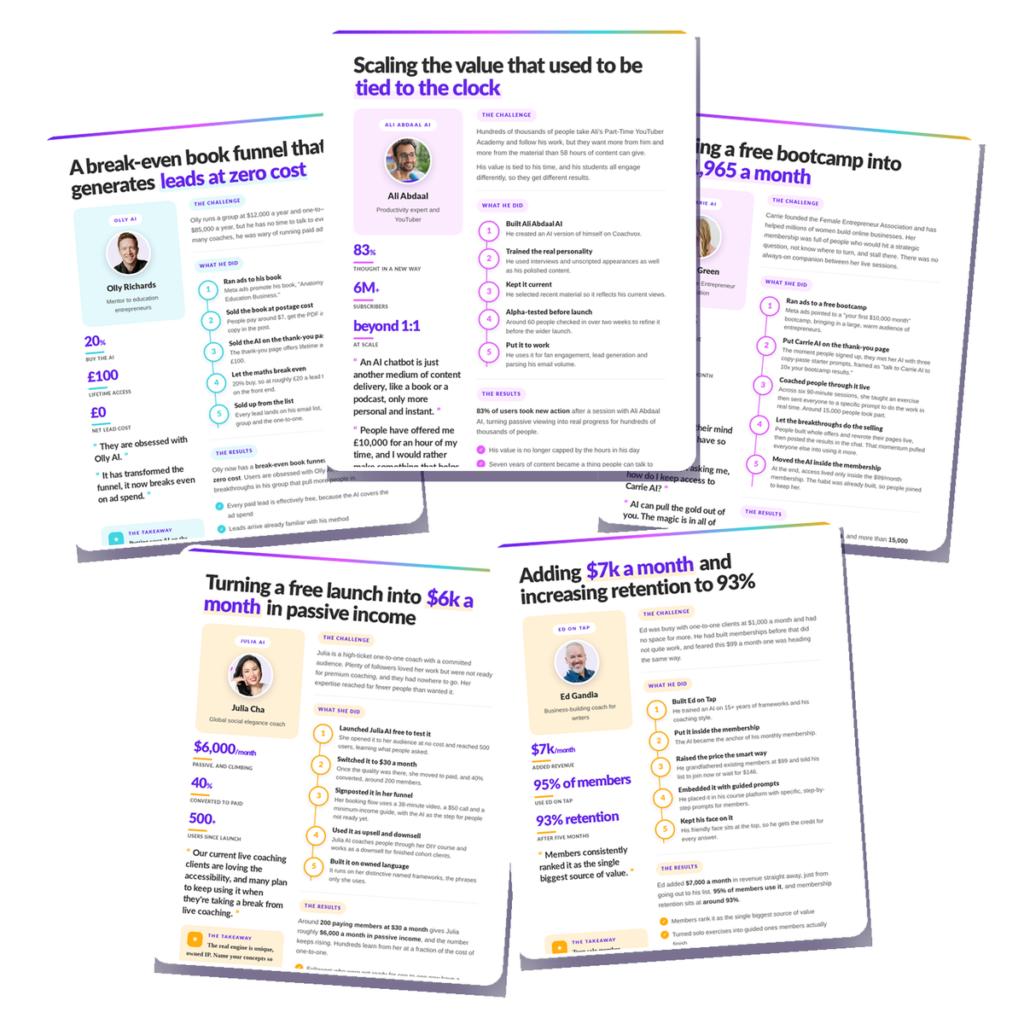
With Coachvox, you can train an AI version of yourself on your content, frameworks and methodology. Share it with your audience or add it to your website so prospective clients can experience your expertise whenever they’re interested.

Your social media audience is valuable, but your email list gives you a direct way to contact people who’ve expressed interest in your work. When you announce available coaching spaces or a new programme, you’ll have a group of prospective buyers you can reach without relying on social media algorithms.
Give people a reason to subscribe. A useful checklist, short course, assessment or downloadable framework can attract prospects who want help with a particular problem. Your Coachvox can also collect contact details from people who engage with your expertise. Focus on attracting subscribers who fit your ideal client profile and have a genuine interest in what you offer.
Then actually email them. An impressive subscriber count achieves nothing when your last newsletter went out a year ago. Share useful insights, client stories and invitations to engage with your work. Keep building familiarity so your subscribers remember why they signed up when you eventually make an offer.
When you’ve built an interested audience, give people a compelling reason to act when places become available. Announce your coaching opportunities with clear enrolment dates, specific eligibility criteria and genuine limits on availability. If you only accept five private clients at a time, say so. If your next cohort has 20 places, explain when applications close and when the programme begins.
Position your offers as opportunities to work with you. Explain who they’re designed for, what clients can expect and why you’ve structured them that way. Make the application process straightforward. A waiting list can also help you gauge interest before opening enrolment and give interested prospects an opportunity to hear about available places first.
Scarcity works when the limits are genuine and people already want what you’re offering. Invented deadlines and permanently expiring offers won’t do your reputation any favours. The ultimate position is to have people waiting for your next announcement, ready to apply because they’ve already decided they want to work with you.
Your clients already know how good you are. Coachvox Academy helps you build the reputation and online presence that makes your ideal clients seek you out, with Jodie Cook guiding you through the process.
Inside Academy, you’ll learn how to:
Nail your positioning: Get clear on who you help, what you’re known for and why clients should choose you.
Build your signature method: Turn your expertise into a recognisable framework people remember and recommend.
Attract your ideal clients: Create content that gets the right people interested in your work.
Build trust before the first call: Develop digital assets that demonstrate your expertise.
Generate qualified leads: Put your AI version to work introducing prospects to your coaching approach.
Grow with ongoing support: Get feedback, improve your approach and keep building with Jodie and the Academy community.
Become the coach people think of first when they need your expertise.
Becoming an in-demand coach starts with being known for something specific, building an audience that values your expertise and giving people plenty of reasons to choose you.
Look at where your business stands today. Are enough people discovering your work? Do they remember what you’re known for? Are they interested enough to apply when you announce new coaching spaces? Find your weakest area and make it your next priority.
The ultimate goal is a coaching business where you choose your clients, fill your programmes and grow on your terms. A business where the next client is already waiting for you.
An in-demand coach has built a strong reputation in their niche, with more people wanting to work with them than they have spaces available. Their expertise is recognised, clients recommend them by name, and they can attract new business without constantly searching for prospects.
Building a reputation as a sought-after coach usually takes years of delivering results, developing your expertise and becoming known in your niche. However, established coaches already have a head start. Your existing clients, testimonials and coaching experience give you plenty to work with. The next step is making more people aware of it.
Become known for solving a specific problem exceptionally well. Develop a recognisable methodology, share your expertise consistently and build relationships with people who can recommend you. The easier it is for someone to explain what makes you valuable, the easier it is for them to refer the right clients.
A large, engaged social media following can make attracting coaching clients and filling programmes considerably easier. However, a smaller audience of people who are genuinely interested in your services can generate substantial demand. Focus on reaching prospective buyers and building an audience that pays attention when you make an offer.
Writing a book can strengthen your reputation, introduce your expertise to new audiences and help establish you as an authority in your coaching niche. It's particularly valuable when you have a distinctive methodology worth sharing. A book is one way to become better known, alongside speaking, podcast appearances and building an online audience.
Build an audience that regularly experiences the value of your expertise through content, recommendations and useful resources. Over time, interested prospects become familiar with your approach and may approach you when they're ready for coaching. Tools such as Coachvox AI also let prospects interact with your methodology and enquire about working with you when you're unavailable.
In-demand coaches often fill group programmes by announcing enrolment to an existing audience of interested prospects. They've already established their reputation and demonstrated the value of their work. Clear enrolment dates, limited places and an engaged waiting list give prospective clients a reason to act when applications open.
Yes. Coaches with established reputations and clearly explained offers can attract clients who are ready to purchase without a discovery call. This works particularly well for structured group programmes and digital coaching products. Private, high-ticket coaching may still benefit from an initial conversation to assess suitability.
Coachvox AI lets you create an AI version of yourself trained on your coaching methodology and content. Prospective clients can ask questions, experience your approach and receive personalised guidance before deciding whether to work with you. Your AI can also capture leads, helping you turn audience interest into potential coaching enquiries.
Coachvox Academy helps established coaches improve their positioning, build their online presence and create digital assets that attract prospective clients. It provides training and support for developing an AI-powered coaching business, giving you a structured way to build your reputation and generate demand for your expertise.