
Turn your lead magnet into a client-generating asset that actually works for your coaching business
You’ve spent hours creating what you thought was the perfect lead magnet. Maybe it’s a detailed PDF guide, a video training series, or a carefully crafted mini-course. You promoted it across your channels, added it to your bio links, and watched the download numbers tick up. But then… nothing. Those leads aren’t booking calls. They’re not engaging with your emails. They’re certainly not becoming paying clients. You’re doing the work and getting nothing back.
This happens to most coaches. The fix is simpler than you think.
Most coaches assume a struggling lead magnet needs better promotion or a flashier design. Usually the problem sits somewhere else entirely. Your lead magnet might be attracting the wrong people, solving the wrong problem, or creating a disconnect between what you’re giving away and what you actually sell. Small misalignments create big conversion gaps.
This article shows you exactly why your lead magnet isn’t converting and gives you specific fixes you can implement this week to start generating qualified coaching leads.
Your lead magnet might be getting downloads, but if those people aren’t turning into conversations and clients, something’s broken in the system. Let’s look at the most common reasons coaches struggle with lead magnet conversion.
You created something informative and well-researched, but here’s the issue – your ideal clients aren’t looking for general education right now. They’re looking for help with the specific problem keeping them stuck today. A lead magnet about “building confidence as a leader” is too broad when your target client is lying awake at night worried about an upcoming board presentation or a difficult team conversation they need to have tomorrow.
Think about the last five conversations you had with potential clients. What exact words did they use to describe their struggles? Your lead magnet needs to address that precise pain point, not the theoretical version you think they should care about. When someone sees your offer and immediately thinks “this is exactly what I need right now,” that’s when high-converting coaching lead magnets actually start working.
Your audience sees hundreds of free offers every week. They’ve downloaded plenty of PDFs that promised transformation and delivered generic advice they could have found anywhere. If your lead magnet title, description, or landing page doesn’t instantly communicate what they’ll get and why it matters specifically to them, they won’t exchange their email for it.
“Free productivity guide” won’t cut it. “The 15-minute morning routine that helps executives reclaim two hours a day” creates a clear picture. Your lead magnet needs a hook that makes someone think “I want that exact outcome” before they even see what’s inside. Vague promises about transformation or growth don’t create urgency; specific, tangible results do.
You’re attracting people interested in time management when you actually sell leadership transformation coaching. Or your lead magnet focuses on social media strategy but your signature program is about mindset and confidence. This is one of the most common reasons why your coaching lead magnet isn’t converting into paying clients.
You’ve built a list of people who want something different from what you’re selling.
Your lead magnet should be the first step in your signature coaching process, not a standalone topic you think will get more downloads. If someone completes your lead magnet and loves it, the natural next thought should be “I wonder what working with this coach would be like?” Paid transformation should be the obvious next step after consuming your free resource.
You mention your lead magnet occasionally in LinkedIn posts, maybe it’s on a few pages of your website, and you’ve added it to your link tree. But if you’re not putting it front and centre of every online asset you have, even the most valuable resource won’t generate leads. Don’t make your ideal clients hunt through your bio links to find something useful.
Your lead magnet needs consistent visibility where your target audience already spends time. That means your LinkedIn profile if you serve executives, your YouTube descriptions if you create video content, pinned posts in relevant Facebook groups if that’s where your people gather. Coach lead magnet conversion strategies start with making sure the right people actually see your offer when they’re in problem-solving mode.

Most lead magnet problems have straightforward fixes once you know what to look for. Let’s walk through the specific changes that will turn your lead magnet into something that actually brings in qualified coaching clients.
Your lead magnet lives on your website, but your ideal clients are scrolling LinkedIn during their lunch break or searching YouTube for solutions at 11pm. Wherever your target audience goes when they’re frustrated and looking for answers—that’s where your lead magnet needs to be.
Start by identifying the three places your ideal clients spend the most time. If you coach executives, link your lead magnet in the featured section of your LinkedIn profile. Mention it again in your about section. If you serve entrepreneurs, pin a post about it in your Instagram highlights and mention it in your most popular Reels. Make your lead magnet easy to find with strategic placement.
Stop trying to appeal to every coach, consultant, or business owner who might benefit from your work. Your lead magnet should make one very specific person feel like you’ve been reading their mind. When you narrow your focus, you actually increase conversions because the right people feel instantly seen.
Look at the language your best clients used before they hired it. What exact phrases did they say when describing their problem? Use those words in your lead magnet title and description. If they said “I feel like I’m firefighting all day and never getting to the real work,” don’t translate that into “struggling with time management.” Use their language. When someone sees their exact problem reflected back at them, they download immediately.
Creating an AI version of you with Coachvox means that your prospects are able to ask your AI the exact questions they want answers to. You’ll get their name, email address, and even see the transcripts so you can target your follow-up accurately.
Your lead magnet should give people a taste of your methodology while naturally creating desire for the complete transformation. Think of it as the first module in your coaching process, not a random valuable thing you’re giving away. Someone who completes your lead magnet should understand your approach and want more of it.
Map out your signature coaching framework or process. Your lead magnet should address step one or solve one specific piece of the larger problem you solve through coaching. If you help leaders build high-performing teams, your lead magnet might focus on the diagnostic phase; helping them identify exactly what’s breaking down in their current team dynamics. The natural next step is working with you to fix it.
This is another major benefit of the Coachvox platform. Prospects have had a taste of your coaching via your AI. Now the natural next step is working with the real thing!
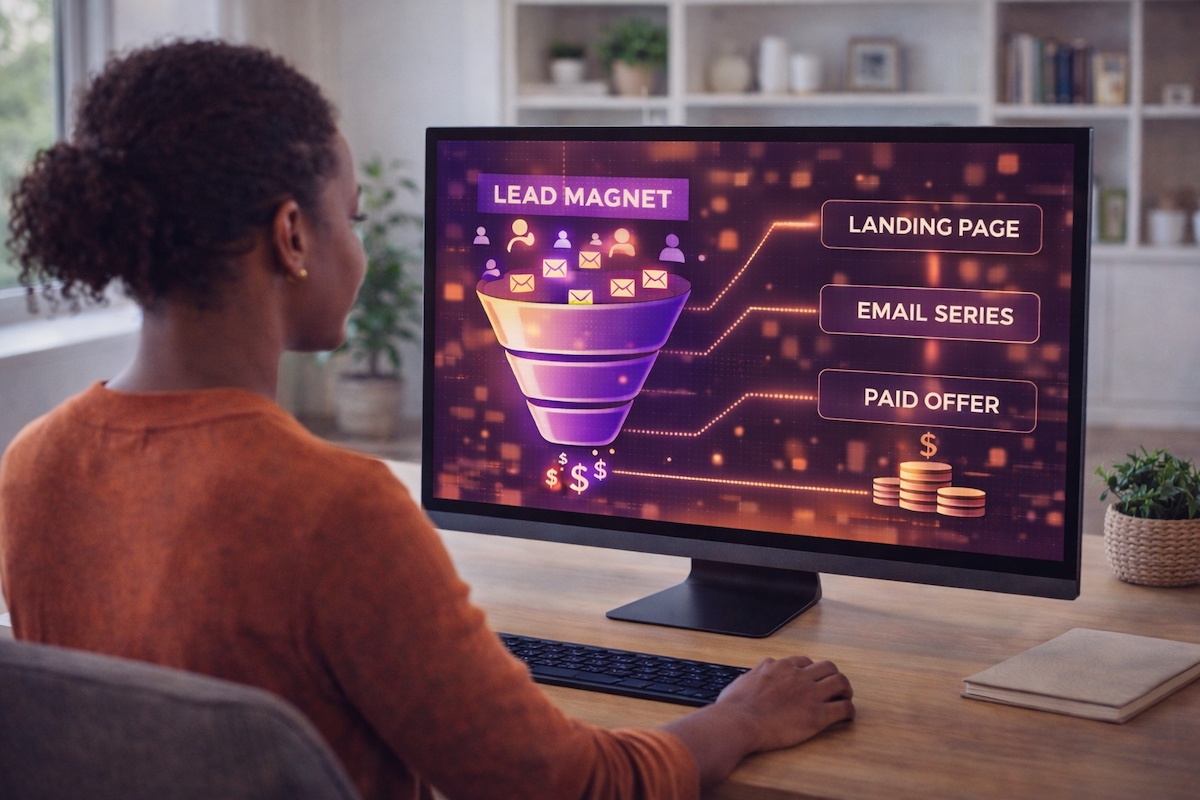
Your lead magnet delivery email shouldn’t be the last thing someone hears from you for two weeks. The days immediately after someone downloads are when they’re most engaged and most likely to take the next step. A lead magnet nurture sequence for coaches should guide people from “this free resource was helpful” to “I want to explore working with this coach.”
Plan a five-email sequence that delivers over 7-10 days. Email one delivers the lead magnet with clear instructions. Email two shares a quick win or insight that reinforces your expertise. Email three tells a client success story that mirrors their situation. Email four addresses a common objection or fear. Email five invites them to book a call or take the next step with you. Each email should feel like a continuation of the conversation you started with the lead magnet, gradually building trust and showing them what’s possible when they work with you.
Walk through your lead magnet process as if you’re a stranger seeing it for the first time. How many clicks does it take from discovering your offer to actually receiving it? Are you asking for their life story in the opt-in form, or just an email address? Does the confirmation email land in their inbox immediately, or do they wait wondering if it worked?
Every extra field in your form, every unclear instruction, every minute of delay creates an opportunity for someone to abandon the process. Test your opt-in on mobile since that’s where most people will discover it. Click the confirmation link yourself. Download the file. If anything feels clunky or confusing to you, it’s definitely stopping potential clients from converting. Fix the broken links, simplify the form to name and email only, and make sure your delivery happens within 60 seconds.
You created a 40-page PDF because that’s what everyone says lead magnets should be. But your ideal clients are busy executives who consume everything on their phone between meetings. They’re not sitting down to read your comprehensive guide—they need something they can absorb in five minutes while waiting for their next call. Some of the highest-converting lead magnets right now are interactive experiences like an AI coach they can chat with anytime, getting personalized insights based on their specific situation.
Pay attention to how your target audience engages with your existing content. Do they watch your videos all the way through or do they scroll past? Do they save your carousel posts or just like them? A quick video walkthrough might serve your audience better than a lengthy written guide, or an interactive assessment could generate more engagement than a static workbook.
Sometimes the problem isn’t how you’re promoting your lead magnet or what your nurture sequence looks like. The lead magnet itself might be solving the wrong problem or blending in with the dozens of similar resources your audience has already downloaded and forgotten about. If you’ve optimized everything else and still aren’t seeing conversions, it might be time to start fresh.
Look at what other coaches in your space are offering. If everyone has a “free guide to confident leadership” or a “5-day email course on productivity,” your similar offer won’t stand out no matter how good it is. Your new lead magnet should either solve a problem no one else is addressing or solve a common problem in a distinctly different way that showcases your unique approach.
Your lead magnet is getting downloads but those people aren’t booking calls or becoming clients. The jump from a free resource to your full coaching package might be too large for most people to take immediately. They need a smaller next step that builds trust and demonstrates value while they’re still engaged and thinking about their problem.
Create a time-limited offer that appears immediately after they access your lead magnet. A tripwire purchase works exceptionally well here—a low-cost, high-value offer available only for the next 48 hours. This could be a recorded workshop for $27, a template library for $47, or a 30-minute power session for $97. People who make even a small purchase from you are significantly more likely to become full coaching clients later. The urgency on this next step transforms your lead magnet from a standalone download into the beginning of a buying relationship.
Get your lead magnet working with your AI coach
You’ve got the fixes. Now here’s something most coaches haven’t considered yet. An AI version of yourself works as an interactive lead magnet that delivers your actual coaching approach and qualifies leads while you sleep.
Top coaches use Coachvox to capture leads, showcase their work and scale their impact.
Start your free trial today. Set up takes less than an hour:
Your lead magnet doesn’t need a complete overhaul. Start with the fix that addresses your biggest gap. If nobody’s finding it, focus on visibility first. If you’re getting downloads but no conversations, build out that nurture sequence or add a tripwire offer. If the wrong people keep signing up, tighten your positioning. Pick one thing and implement it fully before moving to the next.
The coaches who consistently convert leads into clients aren’t doing anything magical. They’ve simply aligned their lead magnet with what their ideal clients actually need, made it easy to find, and created a clear path from download to discovery call. Your lead magnet can do the same. Make the changes, track what happens, and adjust based on real results from real people engaging with your offer.
Your lead magnet is likely attracting interest but not buying-ready prospects. Many low-converting lead magnets fail because they solve a curiosity problem rather than a paid problem. If your free resource appeals to beginners while your paid offer targets committed clients, you’ll see sign-ups but no sales. Align your lead magnet with the same pain point your paid service solves and ensure it attracts people already motivated to change.
The most common mistake is creating something impressive instead of something relevant. Coaches often build long guides or courses assuming value equals length. In reality, specificity converts better than volume. A short diagnostic, checklist, or assessment tied directly to a paid offer typically converts far better than a long resource unrelated to the next step.
There is no single “good” conversion rate because performance depends heavily on traffic quality, audience intent, and offer relevance. Cold traffic may convert below 10%, while highly targeted or warm audiences can convert much higher. Instead of focusing on opt-in percentage alone, track how many subscribers become conversations or paying clients. A smaller list of qualified prospects is far more valuable than a large list of disengaged subscribers.
If subscribers don’t engage, reply, or enquire about working with you, your audience is misaligned. Warning signs include low email responses, no discovery calls, and high unsubscribe rates. Compare your lead magnet topic to your ideal client’s urgent problem. If they don’t match exactly, refine your positioning and targeting.
Optimise how the lead magnet is presented rather than rebuilding it. Improve your headline, promise, CTA, and landing page clarity. Make the outcome explicit and time-bound. Replace vague wording like “learn productivity” with concrete results such as “identify your top three time leaks in five minutes.”
Yes. Strong alignment dramatically improves client conversion. Your lead magnet should act as a preview of your paid transformation. If your programme helps clients scale their business, your lead magnet should diagnose growth blockers, not teach generic tips. Alignment ensures the same people attracted to your free content are the ones most likely to buy.
A high-converting AI-powered lead magnet is an interactive chat experience that feels like “trying the coach before you buy.” With Coachvox, the lead magnet is the conversational interface itself: a prospect chats with an AI version of the coach, gets tailored guidance in the coach’s voice and methodology, and then shares their name and email to continue or receive follow-up. This works well because it delivers immediate, personalised value while also qualifying the lead. The coach captures the contact details and can review what prospects are asking, which makes follow-up more relevant and increases the chance of converting the right people into calls and clients.
They attract curiosity rather than commitment. If your topic appeals to general interest instead of urgent need, subscribers may enjoy the content but feel no reason to act. High-performing lead magnets target a problem people already want solved now. The closer your free offer is to a buying decision, the higher your client conversion rate.
Diagnostic or outcome-based formats tend to convert best. Assessments, scorecards, audits, and an AI coach version of you reveal a gap between where the prospect is and where they want to be. This naturally creates demand for coaching support. Static PDFs usually convert less effectively because they lack personal relevance.
Add a structured follow-up sequence after sign-up. A simple framework is: deliver the resource and quick win, explain the core mistake they’re making, share a case study demonstrating results, then invite them to take the next step such as booking a call or even buying a tripwire product. Consistent follow-up is often what converts leads into clients.
Yes. Personalised outputs significantly boost engagement because they feel more relevant and valuable. Tools such as Coachvox allow coaches to create conversational lead magnets that respond dynamically to users’ answers. This interaction keeps prospects engaged longer and increases the likelihood they continue toward a paid step.
Your promise is probably too broad or too easy. Generic topics attract everyone and convert no one. Narrow your promise to a specific outcome for a specific person. For example, replace “confidence guide” with “confidence framework for new executive leaders.” Specificity filters out low-intent prospects.
It should be as short as possible while delivering a clear result. Length does not determine value. A five-minute diagnostic that reveals a key insight is often more powerful than a long guide. Focus on delivering one meaningful outcome quickly, because speed of insight increases trust and motivates prospects to continue.
Measure behaviour after sign-up. If opt-ins are strong but engagement is low, the issue is audience relevance or content value. If opt-ins are low, the issue is positioning or messaging. Test one variable at a time, such as headline, CTA, targeting, or format, so you can identify what actually needs fixing.
Match it to a paid-ready pain point. Identify the exact problem your best clients already pay you to solve, then create a lead magnet that diagnoses or highlights that same issue. This instantly improves lead quality because it attracts people who already recognise they need help.
Yes. Segmentation improves conversion rates because different audiences have different goals and problems. Creating targeted lead magnets for each segment increases relevance and response. For example, one resource for beginners and another for experienced professionals ensures each prospect receives messaging that matches their stage.
If you’re starting from scratch, a well positioned and well crafted PDF, workbook, or mini-course could be perfect. However, going a step further, using a conversational tool like Coachvox, you can launch a shareable chat link or embed a chat widget on your site so prospects can engage with an AI version of you. You will capture a name and email address from everyone that chats to it. You can also see what the prospect discussed with the AI, making it easy to follow up with a relevant message or invitation to a call. This turns the lead magnet into an experience that qualifies leads while showcasing your coaching style.